



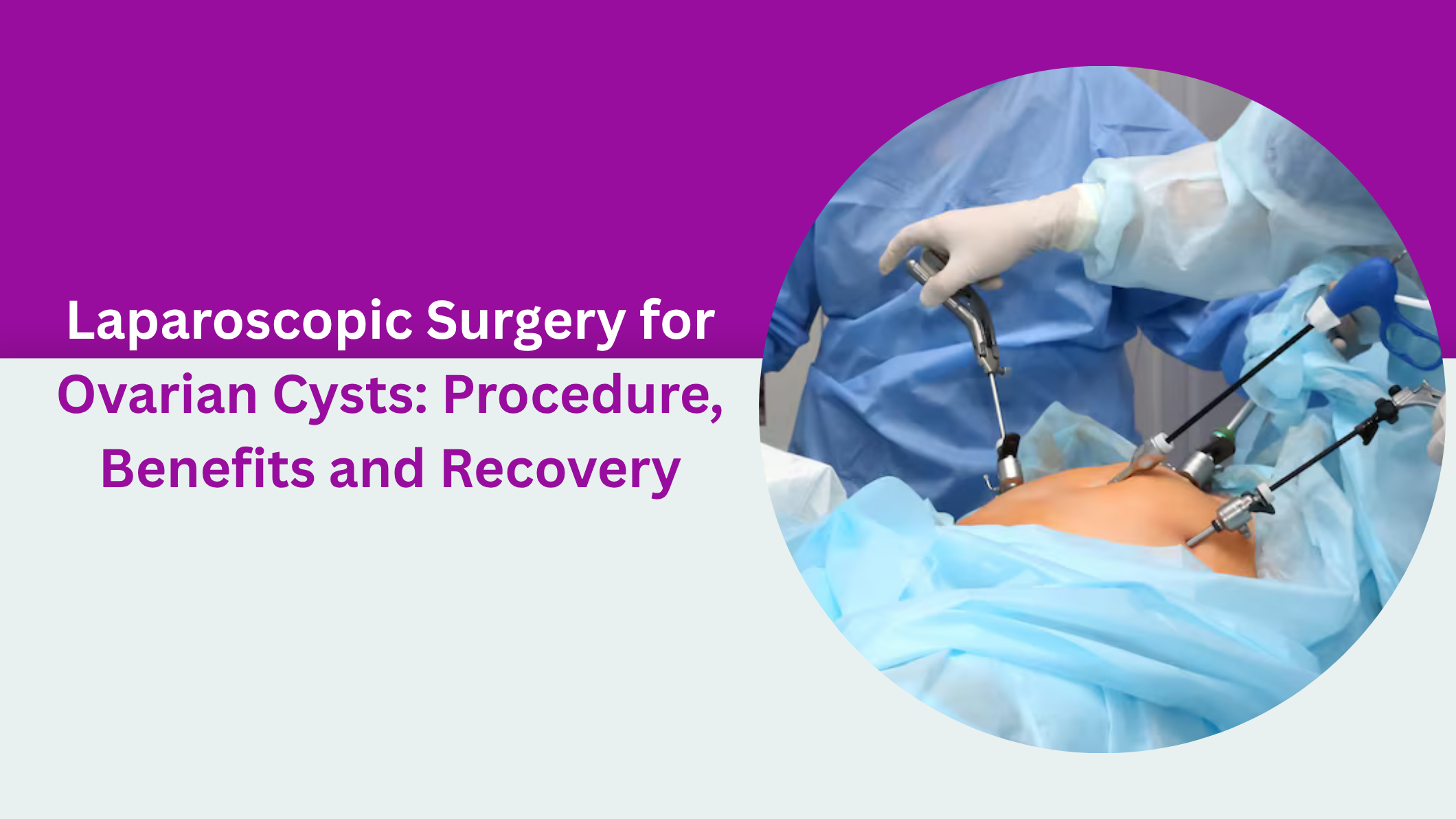
Ovarian cysts are fluid-filled sacs that develop in or on the ovaries. They are common and often disappear naturally without requiring treatment. However, some cysts may become large, cause persistent pelvic pain, or have features that require further medical investigation. In such cases, a gynaecologist may recommend laparoscopic surgery for ovarian cysts.
Laparoscopic surgery is a minimally invasive procedure that uses small incisions and a camera to help the surgeon examine the pelvic organs and remove the cyst when appropriate. Understanding the procedure, its benefits, and the recovery process can help women make informed decisions about their reproductive health.
1. Understanding the Procedure and Benefits of Laparoscopic Surgery for Ovarian Cysts
Laparoscopic ovarian cyst surgery is commonly performed under general anaesthesia, meaning the patient is asleep during the procedure. The surgeon makes a few small incisions in the abdomen and inserts a thin instrument called a laparoscope, which has a camera and light. Images from the camera appear on a monitor, allowing the surgeon to examine the pelvic organs and guide the surgical instruments.
When possible, the surgeon removes the cyst while preserving healthy ovarian tissue. This procedure is known as an ovarian cystectomy. In certain cases, removing an ovary may be necessary, depending on the cyst's characteristics, the patient's health, and the possibility of malignancy. The removed tissue may be sent to a laboratory for examination.
Not every ovarian cyst requires surgery. Treatment depends on the cyst's size, appearance, symptoms, and the patient's age and medical history. Ultrasound scans, physical examinations, and additional tests may help the doctor determine the appropriate approach.
One of the primary benefits of laparoscopic surgery is that it uses smaller incisions than traditional open surgery. This often results in less postoperative pain, smaller scars, a shorter hospital stay, and a faster return to normal activities. For suitable patients, it may also help preserve ovarian function and fertility by allowing the surgeon to remove the cyst without removing the entire ovary.
However, laparoscopic surgery is not suitable for every case. Very large cysts or cysts with concerning features may require a different surgical approach. As with any operation, potential risks include bleeding, infection, injury to nearby organs, and complications related to anaesthesia. A qualified gynaecologist can explain the benefits and risks based on the individual patient's condition.
2. Recovery After Laparoscopic Ovarian Cyst Surgery
Recovery after laparoscopic ovarian cyst surgery varies according to the complexity of the procedure, the patient's overall health, and whether any complications occur. Many patients can return home on the same day or the following day, depending on their condition and the hospital's discharge guidance.
Mild abdominal discomfort, bloating, tiredness, and temporary shoulder pain may occur during the first few days. Shoulder discomfort can result from the gas used during surgery. These symptoms generally improve as the body recovers.
Following the surgeon's instructions is essential for a smooth recovery. Patients should keep their incision sites clean and follow the recommended wound-care routine. Gentle walking can help maintain circulation, while heavy lifting, strenuous exercise, and other demanding activities should be avoided until the doctor confirms they are safe. Pain relief and other medications should be taken as prescribed.
Many women resume light daily activities within a few days, although complete recovery can take longer depending on the operation. Follow-up appointments help the doctor assess healing and discuss laboratory results if the cyst was sent for testing. Women who wish to become pregnant should discuss fertility considerations and ovarian function with their gynaecologist.
Seek prompt medical attention if you experience severe or worsening abdominal pain, fever, heavy vaginal bleeding, fainting, difficulty urinating, or redness and discharge around an incision. These symptoms may indicate a complication and should not be ignored.
Choosing the right treatment begins with an accurate diagnosis and an individualised medical assessment. Dr. Preeti Tandon at Fakeeh University Hospital provides expert healthcare regarding this, supporting women with informed guidance and care for their reproductive health.